

Company Logo
SIGN UP LOGIN

Great move Blog

Great move Blog

Subscribe and receive email notifications of new blog posts.


rss logo RSS Feed
Lifestyle | 2 Posts
Mogadore | 5 Posts
Summit County | 2 Posts
July
10

What is the Mogadore Summer Festival?

Every July, the Village of Mogadore hosts its annual summer festival - a multi-day outdoor event centered on great food, community activities, and support for local youth athletics. The organizing theme is simple: "Great Food. Fun Activities. Stronger Community."

The festival is the flagship fundraiser for Mogadore Youth Football & Cheerleading. All proceeds go directly toward providing equipment, safety gear, uniforms, and memorable experiences for the young athletes who carry the Mogadore Wildcats name each season.

Think of it less like a big-ticket event and more like the neighborhood coming alive. Former players returning to buy old jerseys. Kids dunking their coaches. Families piling plates with Wildcat Fries and wandering between booths in the warm July air. It's the kind of event that - once you've been - you put on the calendar every year.


Festival dates and hours

The 2026 Mogadore Summer Festival is listed in the Ohio Festivals Guide as a confirmed July 16–18 event. Here are the hours:

Day

Date

Hours

Thursday

July 16

6:00 PM – 11:00 PM

Friday

July 17

6:00 PM – 11:00 PM

Saturday

July 18

11:00 AM – 11:00 PM

Saturday is the biggest day - it starts earlier, runs longest, and is home to the 5K run, the parade, and the fireworks afterglow from the night before.

2026 Mogadore Summer Festival three-day schedule showing Thursday July 16, Friday July 17, and Saturday July 18 with key events, as illustrated by Great Move Realty

The food you'll actually want

Let's be real: a summer festival lives or dies by its food booths, and Mogadore's have earned their reputation.

Famous Wildcat Fries are the signature item - golden, loaded, and the kind of thing you'll think about on the drive home. Famous Soft Pretzels (both the original and dessert versions) draw their own line. Italian Sausages are a festival staple done right. And beyond the headliners, additional food vendors round out the options.

The Mogadore Youth Football & Cheer booths are scattered throughout the grounds, so grabbing something from them directly supports the athletes.


All the things to do

The festival packs a lot into three evenings (and one long Saturday). Here's what you can expect:

Jail Cell - Lock up your friends, family, coaches, or teachers. One of the more chaotic and beloved traditions at the festival. No one is safe.

Bake Sale - Homemade treats from community members. The lineup varies, but the quality is always there.

Vintage Trophy Sale - Decades of Mogadore athletic history in physical form. If you or a family member ever played for the Wildcats, this is worth a browse.

Old Cheer & Football Uniform Sale - Former players and fans pick these up as keepsakes. Authentically Mogadore.

Chuck a Luck Booth - Try your luck and walk away with prizes. A classic carnival staple that fits right in.

On-Demand T-Shirt Heat Press Station (NEW in 2026) - This is the addition worth showing up for. Choose from classic or modern Mogadore Wildcats logos, pick a green or black shirt (or bring your own), and press a custom shirt on the spot. Design it. Press it. Wear it home that night.

Activities at the 2026 Mogadore Summer Festival including Wildcat Fries, Soft Pretzels, Jail Cell, Dunk Tank, Fireworks, Bake Sale, 5K Run, Parade, T-Shirt Press, Trophy Sale, and Chuck a Luck, as illustrated by Great Move Realty

Friday night is the highlight reel

If you can only make one evening, make it Friday.

The Dunk Tank is Friday only. Your chance to send a favorite Mogadore face into the water - coaches, teachers, community figures. The line moves fast. Come ready.

Fireworks close out Friday night. The festival grounds don't need much decoration when the sky does the work. Gather early, stay late.

Both events run within the regular Friday hours of 6:00 PM – 11:00 PM, so there's plenty of time to eat, browse the booths, and still be in position for the light show.


Saturday: the parade, the 5K, and a full day

Saturday is the festival's main event, running from 11:00 AM straight through to 11:00 PM.

The parade

At 6:00 PM, the Mogadore Summer Festival Parade steps off from the corner of Bradley Street and North Cleveland Avenue. The route ends at Somers Elementary. It's one of those parades where you recognize half the people in it - Wildcats athletes, coaches, local businesses, community groups. Stake out your spot along North Cleveland early.

The 5K run & 1 mile walk/run

For the early risers: the Mogadore Summer Festival 5K Run & 1 Mile Walk/Run kicks off at 8:00 AM at 3875 Curtis St, right next to Mogadore High School and Mogadore Memorial Stadium.

  • 5K registration: $22.20 (includes t-shirt) - register by July 15 via RunSignUp

  • 1-Mile Walk/Run: $11.60 - register by July 15

  • Day-of registration is allowed but you won't receive a timed result or t-shirt (cash only)

  • Timing by Drop The Hammer Running Company; awards for top finishers in each age category

  • Contact: Katie Lane at 330-322-2835 (call or text)

The race is billed as a family-based community event open to all abilities - runners, walkers, and stroller runners alike. If you've been looking for a reason to register, this is a good one.


Why this festival matters beyond the fun

Every dollar spent at the Mogadore Summer Festival goes back into the community. The event is the primary fundraiser for Mogadore Youth Football & Cheerleading, covering equipment, uniforms, safety gear, and the experiences that young athletes remember long after the season ends.

The Mogadore Wildcats aren't just a team - they're part of the identity of a small village that takes pride in what it builds together. The festival is one of the clearest expressions of that.

"Every dollar raised helps provide equipment, uniforms, safety gear, and memorable experiences for our Mogadore youth athletes." - Mogadore Youth Football & Cheerleading


What the festival says about living in Mogadore

An annual summer festival is, in some ways, a mirror. It shows you what a community values, who shows up for it, and how it takes care of its own.

Mogadore is a village of around 4,000 people in Summit County, Ohio - the kind of place where your neighbor coaches Little League, your kid's school is a short walk away, and the main street shuts down once a year so the whole town can watch the parade together. It's not for everyone. But for families looking for genuine community in Northeast Ohio, it's the kind of place that earns loyalty fast.

The Ohio Festivals Guide lists the Mogadore Summer Festival for 2026 alongside larger regional events - a small signal that this local tradition has reach beyond the village limits.

Infographic showing what makes Mogadore Ohio a great community: Summit County location, Annual Summer Festival, Youth Sports, and strong neighborhoods, as illustrated by Great Move Realty

Try Great Move Realty

If the festival has you thinking about Mogadore in a new way, Great Move Realty is the local expert worth calling. Based at 154 S. Cleveland Ave, Mogadore - on the same street as the festival parade - the firm was founded by Principal Broker Mike Love, a Summit County specialist with 9 years of experience, 148 closed sales, and a philosophy built around treating every client the way he wished he'd been treated on his own first purchase. Great Move Realty covers Mogadore, Tallmadge, Uniontown, Hartville, Green, and greater Summit County. Reach them at (330) 624-9605 or browse current Mogadore listings on the site.

July
6

Summit County's June 2026 real estate market is firmly in seller's territory - homes selling in 7 days, above asking price. Here's everything buyers and sellers need to know.

Summit County Market Update June 2026 - Key Details: 1.5 months inventory, 101% list-to-sold ratio, 7 days median on market, $240,000 median sold price. Seller's Market. Great Move Realty / Mike Love, Principal Broker.

Every month, Realtors Property Resource (RPR) - the nation's largest property database, exclusively for REALTORS - publishes a comprehensive market trends report for Summit County. The June 2026 numbers tell a clear story.

The headline stats for Single Family homes and Condos/Townhouses/Apartments in Summit County this June:

Metric

Value

Month-over-month

Market type

Seller's Market

-

Months of inventory

1.5

+3.45%

Median days on market

7

Stable

Sold-to-list price ratio

101%

+1.04%

Median sold price

$240,000

-1%

Median estimated property value

$266,230

+0.4%

Active listings median list price

$249,425

+4%

New pending listings median list price

$245,000

+2.1%

Public records median sold price

$235,000

+9.3%

Source: Realtors Property Resource, June 2026 Market Trends Report - Summit County, Ohio

A few things jump out immediately. That 1% dip in median sold price is less alarming than it looks - the sold-to-list ratio actually increased to 101%, meaning buyers are still paying above asking on average. The month-over-month sold price variation likely reflects a mix shift in what types of homes closed in June versus May, not a cooling trend. The 12-month trajectory tells the real story: property values are up 3.2% year-over-year, a healthy and sustainable appreciation rate.

Inventory: the engine driving everything

At 1.5 months of supply, Summit County sits 73% below what economists consider a balanced market (5–6 months). That's the single most important number in this report - everything else flows from it.

Low inventory does a few things simultaneously:

  • It limits buyer choice, which concentrates demand on whatever is available.

  • It accelerates the timeline to contract. Seven days on market isn't a fluke - it's the direct result of more buyers chasing fewer homes.

  • It gives sellers pricing confidence. Active listings are currently listed at a median of $249,425, up 4% from last month. Sellers know they have leverage.

The 3.45% month-over-month uptick in inventory is worth noting but shouldn't be mistaken for a tide turning. We're moving from extremely tight to very tight - still firmly seller territory. If that pace of inventory growth accelerates to 8–10% per month consistently, it would signal a real shift. For now, it's seasonal noise.

Seller vs. Buyer Power - Summit County Ohio June 2026. Scale tipped decisively toward sellers: homes sell in 7 days, buyers bid above asking, 1.5 months inventory.

Prices: what's actually happening

The median sold price of $240,000 in June is down from roughly $242,400 in May - but up meaningfully from approximately $232,600 a year ago, per the RPR year-over-year data. That's 3.2% annual appreciation, which is solid without being the frothy 8–10% annual gains that tend to precede corrections.

The median estimated property value of $266,230 is higher than the median sold price. That gap is normal and reflects the mix: estimated values across all properties (including those not currently listed) tend to skew toward higher-value homes, while the sold median reflects what actually traded hands in a given month - often a higher proportion of mid-tier and entry-level properties.

The public records figure - $235,000 median sold price, up 9.3% month-over-month - is worth a quick explanation. Public records capture every transaction, including bulk sales, investor purchases, and off-market deals. That 9.3% monthly jump likely reflects institutional or multi-property transactions closing in June, not a sudden surge in retail prices.

Year-over-year price trend: Summit County Ohio median sold price up 3.2% from June 2025 (~$232,600) to June 2026 ($240,000). Estimated property value: $266,230.

What this means for buyers

If you're buying in Summit County right now, the single most important thing you can do is get fully pre-approved before you start shopping - not pre-qualified, but fully pre-approved with documentation reviewed by an underwriter. In a 7-day median market, there's no time to start that process after you find the home you want.

A few other things we're seeing that matter in this environment:

Clean offers win. With sellers fielding multiple offers, contingencies are a liability. That doesn't mean waiving an inspection outright (we'd never recommend that), but minimizing timelines and keeping your terms as clean as possible goes a long way.

Don't fixate on the list price as a ceiling. With a 101% sold-to-list ratio, budgeting to the list price means you'll consistently lose to buyers who came in slightly above. Know your true ceiling and be prepared to use it.

Act on first showing. The homes going in 7 days aren't getting there because buyers scheduled a second visit. If a home checks your boxes on the first walkthrough, trust your preparation and move.

What this means for sellers

If you're selling in Summit County this summer, the conditions are genuinely favorable - but that doesn't mean any price will stick.

The two-tier market is real. Updated, well-priced homes in desirable neighborhoods are moving fast and above asking. Dated or overpriced homes are sitting. The 7-day median is an average - it doesn't mean every home sells in a week. Pricing precisely (not optimistically) is what puts your home in the first category.

July and August typically bring a seasonal lull as vacation schedules fragment buyer attention. If you're thinking about listing, the window right now - early July - is still strong. Waiting until September may mean competing with a wave of fall listings and a slightly cooler buyer pool.

What's ahead for Summit County real estate

The structural drivers holding Summit County's market together are solid: regional employment anchors in healthcare and higher education, an Akron downtown revitalization that's drawing genuine buyer interest, and the ongoing affordability advantage relative to higher-cost metros like Cleveland proper and Pittsburgh.

The risk to watch is interest rates. June 2026's rate environment has compressed affordability at the lower end of the market, which is limiting first-time buyer volume. That's part of why inventory is slowly ticking up - some would-be sellers who don't need to move are staying put rather than trading into a higher-rate mortgage.

The overall read: Summit County real estate is healthy, data-supported, and still decisively seller-friendly. We don't see the conditions for a significant correction, but we also don't expect the urgency to intensify much further from here. A steady, competitive market is what we have going into the second half of 2026.

Work with Great Move Realty

Great Move Realty has been serving buyers and sellers across Summit County with data-driven, honest real estate guidance. Whether you're trying to price a home to move quickly or figure out how to win in a market where seven days is standard, Principal Broker Mike Love brings the local knowledge and the numbers to help you navigate it.

Ready to talk through what this market means for your specific situation? Reach out to Mike at +1 (330) 624-9605 or visit greatmoverealty.net to get started.

June
29

Fourth of July Firework Safety in Big Bear | Destination Big Bear

The anchor event: Lock 3 downtown Akron

For most people in the Summit County area, Lock 3 Park is the default destination on the Fourth - and this year, it comes with a three-day food festival wrapped around it.

The All-American Burger & BBQ Festival runs from July 2-4, 11 a.m. to 11 p.m. each day. The vendor lineup includes After Hours BBQ, PigFoot BBQ, Stray Dog, Big Blue BBQ, Da Dawg House, Metro 45, Come Get Fried, Lady T's, and more. The city's DORA (designated outdoor refreshment area) is in effect, so yes - you can walk around with your drink.

The fireworks themselves go at 9:45 p.m. on Saturday, July 4. No tickets, no cost. Just get there early - the good spots along Main Street and Lock 3's backyard on Bowery fill up well before the show.

Practical tip: If you're driving from Mogadore or Tallmadge, aim to arrive by 7:30 p.m. or earlier. Parking downtown fills fast on the Fourth. The lot on Canal Street and the one off Exchange are your best bets, but a lot of locals just park on the outer edges and walk in.

Canal Park: the RubberDucks go full America

Akron RubberDucks at Canal Park are doing fireworks after every game July 3, 4, and 5.


The details:

Date

Game time

Opponent

Special event

Friday, July 3

7:17 p.m.

Erie SeaWolves

Military Appreciation Night + fireworks

Saturday, July 4

7:05 p.m.

Erie SeaWolves

Independence Day fireworks + LED Rally Towel giveaway

Sunday, July 5

6:35 p.m.

Erie SeaWolves

Kids Run the Bases + fireworks

The July 4 game sold out - so if you haven't grabbed tickets, check the July 3 and July 5 games, which still have availability. Tickets for the "Fourth on the Field" event start at $5, with gates opening at 7:00 p.m. on Independence Day.

Canal Park sits at 300 S. Main St., Akron - close enough to downtown that the Lock 3 fireworks at 9:45 p.m. are visible from outside the stadium if your game runs late.

Blossom Music Center: the Cleveland Orchestra does the Fourth right

If you want to mark America's 250th with something genuinely memorable, Blossom Music Center is worth the trip.

The Cleveland Orchestra is doing two separate events:

America at 250 - Friday, July 3 at 8 p.m. American orchestral works performed by the full Cleveland Orchestra, with fireworks at the end. Blossom is at 1145 W. Steels Corners Rd., Cuyahoga Falls - about 20 minutes from Mogadore.

Salute to America - Saturday, July 4 at 8 p.m. The annual patriotic concert with the Blossom Festival Band, patriotic tunes, and fireworks. This one's the more traditional of the two - think Sousa marches and familiar American anthems under the pavilion, then a fireworks finale over the lawn.

Both require tickets. The lawn is more affordable than the covered pavilion and frankly a great experience in good weather.

Around Summit County: events closer to home

Not everyone wants to fight downtown traffic. Here's what's happening in the communities closer to home for Great Move Realty's neighborhoods:

Summit County 4th of July events map for 2026, as taken from Northeast Ohio Family Fun

Green: FreedomFest (June 27)

The City of Green is jumping the gun on the holiday in the best way. Their FreedomFest at Boettler Park runs June 27 from noon to 11 p.m. - games, food vendors, live music, and fireworks to kick off the holiday season. This is the event for families with young kids who want a calmer experience away from the downtown crowds.

Hudson: lighting our legacy festival (July 3)

Barlow Farm Park in Hudson is doing a full evening on July 3 - gates open at 6 p.m., Journey tribute band E5C4P3 takes the stage at 7:30 p.m., and fireworks at dusk. The park is at 1965 Barlow Rd., Hudson - a clean, family-friendly experience in one of Summit County's nicest green spaces. Rain date is July 5.

Stow: 4th of July Parade (July 4)

Stow's parade runs July 4 starting at 10 a.m. The route starts at Kent Road (Target Plaza parking lot) and ends west of Holy Family Church. It's Stow's 68th parade - a solid neighborhood tradition for families in eastern Summit County. If you want to get moving before the heat of the day, the city's Firecracker Run kicks off at 7:30 a.m. the same morning.

Cuyahoga Falls: America 250 Celebration (July 3)

The Downtown Plaza in Cuyahoga Falls is hosting a July 3 event from 6 to 10 p.m. with the Buck Naked Band playing live starting at 7 p.m., local craft beer, food trucks, and fireworks at 10 p.m. It's a walkable, relaxed alternative to downtown Akron, and the July 3 timing means you can do both nights if you're ambitious.

Portage Lakes: the big show on July 11

Worth marking on the calendar even though it's a week later: the annual Portage Lakes fireworks goes off on July 11 at 10 p.m. from Portage Lakes State Park. The Portage Lakes Fireworks Association runs what's widely known as the largest privately funded fireworks show in Ohio. The Portage Lakes Boat Parade runs at 1 p.m. the same day, and there's a Sandcastle Building Contest at 1:30 p.m. This is a full day on the water - one of the best summer traditions in Summit County.

What makes this 4th different: America 250

This isn't just any Fourth of July. 2026 marks the 250th anniversary of American independence, and communities across Northeast Ohio are leaning into it. The Akron Bicentennial Festival is centered at Lock 3, Cuyahoga Falls is billing its event "America 250 Celebration," and the Cleveland Orchestra's concert series is explicitly tied to the sesquicentennial milestone.

It's also worth knowing a bit of local history: John Brown, the abolitionist, rented and lived in a home at 514 Diagonal Road in Akron from 1844 to 1854, under a lease from Col. Simon Perkins. The home is listed on the National Park Service's Underground Railroad Network to Freedom. Akron's history runs deeper than most people realize.

Fireworks at home? Here's what Ohio law actually says

A lot of people in Mogadore, Hartville, and Uniontown want to do their own backyard shows. The rules are more specific than you'd think:

Ohio fireworks rules for July 4th - what's allowed and what's not, as taken from Akron Beacon Journal

Per Ohio law:

  • When: 4–11 p.m. on July 3, 4, and 5 (and the Friday, Saturday, and Sunday immediately before and after the holiday)

  • Where: Your own property, or another person's property with their permission

  • What: Only 1.4G consumer fireworks purchased from a licensed Ohio store - these are standard consumer-grade fireworks, not professional shells

  • Off-limits: Public property, schools, indoors, drought/red flag conditions, within 150 feet of a property with livestock (unless you've given written notice five days in advance)

  • Minors: Not allowed to set off fireworks

  • Alcohol/drugs: A first-degree misdemeanor to discharge fireworks while impaired

One important caveat: local governments can add restrictions or ban fireworks entirely. Check with your township before you set anything up - Mogadore, Tallmadge, and Hartville all have their own local ordinances that may limit what's allowed.

Quick tips for enjoying the shows

Akron July 4th viewing guide - arrival tips, parking, and what to bring

A few things worth knowing before you head out:

Arrive early. Lock 3 is free and open, which means there's no line to manage - just limited good standing and sitting spots. The BBQ festival creates crowds from mid-afternoon on. If you want a prime spot for the 9:45 p.m. fireworks, aim to be in place by 8 p.m. at the latest.

Parking strategy for downtown. The parking lots on Canal St. and around the FirstEnergy building fill early. Locals often park closer to the University of Akron or on the neighborhoods' edge streets and walk in. It's usually a 10-15 minute walk from the outer lots, and you'll avoid the post-show gridlock.

Think about your pets. The fireworks season from late June through July 4 is genuinely hard on dogs and cats. If you have pets at home, the AKC has solid advice on reducing anxiety. Plan to leave them somewhere comfortable before the evening starts.

Weather on July 4. AccuWeather's early forecast for Akron on July 4 shows 86 degrees and sunny - perfect fireworks weather. That said, it's still early, so keep an eye on forecasts as the day gets closer.

Great Move Realty

Northeast Ohio's 4th of July events are a reminder of what makes communities like Mogadore, Tallmadge, Hartville, Green, and Uniontown special places to live. If you're thinking about buying or selling a home in Summit County this summer, Great Move Realty knows these neighborhoods the way only a truly local brokerage can. Principal Broker Mike Love has spent 15+ years helping buyers and sellers navigate the NE Ohio market - with 259 transactions closed, certifications in pricing strategy, military relocation, and negotiation, and a straightforward approach built on education and transparency.

Whether you're a first-time buyer figuring out what neighborhoods make sense, or a seller ready to make a move this summer, reach out to the team at (330) 624-9605 or visit greatmoverealty.net to get started.

June
22

Not all HOAs are created equal. Here's how to spot a well-run condo association - and the red flags that should send you running.

June 22, 2026·10 min read
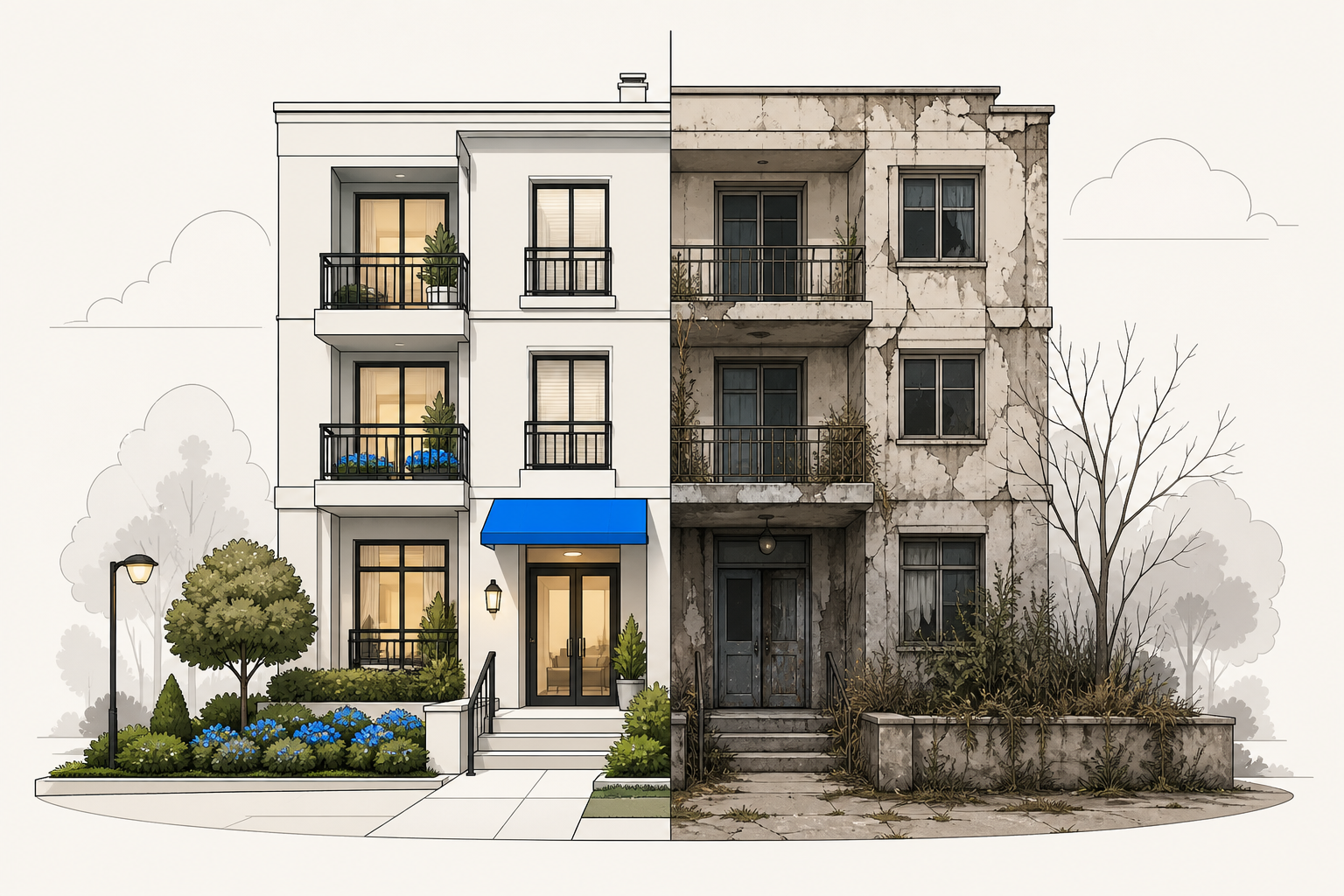
Split illustration of a well-maintained condo building on the left and a neglected one on the right

The HOA can make or break a condo purchase - and it won't be obvious from a tour of the unit. Here's what you actually need to look at:

  • The reserve fund is the single most important number. It should be 30-70% of the annual budget. 55% of HOAs fall short, which means surprise assessments of $2,000-$5,000 or more per unit.

  • Green flags: healthy reserves, transparent finances, professional management, active board elections, consistent rule enforcement.

  • Red flags: financial opacity, deferred maintenance, the same board members for years on end, selective enforcement, and unexplained special assessments.

  • Request these before you make an offer: the reserve study, three years of financials, 12 months of board minutes, and the special assessment history.

  • Why the HOA matters

  • You found a condo with great light, updated kitchen, and a price that works. The unit itself checks every box. But before you write an offer, there's one more thing worth knowing: you're not just buying the unit. You're buying into the association that runs everything around it.

    Roughly 85-90% of condominiums in the United States are governed by a homeowners association - an elected board responsible for maintaining shared spaces, collecting dues, and making big decisions about the building's future. In northeast Ohio, most condo HOAs charge between $250 and $400 a month in dues. That's real money, and what you get for it depends almost entirely on how well the association is run.

    A great HOA means responsive management, a clean and well-maintained community, and - most importantly - a financial cushion that absorbs the big expenses without passing them directly to you. A troubled HOA means deferred maintenance creeping across the building, a reserve fund that's basically a rounding error, and the eventual knock on your door asking for $10,000 to fix the roof.

    The challenge is that none of this is visible from a one-hour showing. You need to look at the documents.

  • Green flags: signs of a well-run HOA

  • Green flags vs. red flags comparison chart for condo HOA evaluation
  • Healthy reserves (30-70% of annual budget)

    This is the number. If there's only one piece of financial data you look at, make it this one.

    Reserves are the HOA's savings account for future capital expenses - roof replacement, parking lot resurfacing, elevator repairs, pool pump replacement. A reserve study (which any legitimate HOA should have) projects these costs decades out and tells you whether the current savings level is adequate.

    The Community Associations Institute recommends reserves sit between 30-70% of the annual operating budget. HOAs with adequate reserves face 25% fewer special assessments. The ones with strong reserves aren't special - they just had a board that planned ahead and enforced disciplined savings over time.

    Ask for the reserve study. Read the full document, not the board's summary of it.

    Transparent, well-reported finances

    A well-run HOA treats its finances like a business. That means annual financial statements available to all residents, regular reporting (monthly or quarterly, not just annually), and fee increases that are clearly explained and gradual - under 10% annually is the norm; anything over 15% in a year deserves a conversation.

    Good associations make it easy to understand what your dues cover. Bad ones make you feel like you're trying to read a foreign language.

    Professional property management

    There's a meaningful difference between a professional property management company and a volunteer board running the show. Professional management means a dedicated staff handling maintenance requests (typically with 48-hour response times), clear communication channels, and institutional knowledge that doesn't walk out the door when a board member moves away.

    "The difference between our place and a friend's condo? Professional property management company vs. volunteer board. Our HOA runs like a business. His HOA runs like a committee. Guess which community is deteriorating?" - r/realestate

    Ask who manages the property, how long they've been in the role, and how maintenance requests are handled. Frequent management company turnover is itself a red flag.

    Active board elections and engaged ownership

    A healthy HOA has fresh faces running for the board regularly - multiple candidates, annual elections, and a culture where homeowners actually show up. Low meeting attendance and uncontested elections year after year are signs of apathy or dysfunction, both of which tend to compound over time.

    One particularly useful metric: owner-occupancy percentage. Owner-occupied buildings have 40% higher meeting participation and 35% fewer maintenance issues than those with high investor ownership. If a building is 60% rentals, the people making decisions have different priorities than the people living there.

    Aim for 75% or higher owner-occupancy. Ask directly - it's a question any listing agent should be able to answer.

    Fair, consistent rule enforcement

    Nobody loves HOA rules. But there's a real difference between rules that are enforced consistently and rules that seem to apply to some residents and not others. Well-run associations issue warnings before fines, have a documented appeals process, and hold all residents - including board members - to the same standard.

    When you review the CC&Rs, check whether the rules are reasonable and clearly written. Overly vague rules are harder to enforce consistently and create more room for disputes.

    Red flags: signs of a troubled HOA

    Underfunded reserves

    We said this already, but it bears repeating: 55% of HOAs in the United States have inadequate reserves, with the national average sitting around 24% - well below the recommended floor of 30%. HOAs with reserves below 10% face six times the risk of special assessments compared to well-funded ones.

    The consequences are predictable. Boards that can't afford to fix things don't fix them. When they absolutely have to, they levy a special assessment. Those assessments typically run $2,000 to $5,000 per unit for routine capital work - and can hit $10,000-$25,000 when something major has been ignored for years.

    "Our HOA claimed we had adequate reserves. During the sale process, I asked for the reserve study and it showed we needed $2.3M in repairs but only had $200k saved up. That's when I learned the board had been lying about our financial situation for years." - r/realestate

    Don't trust the board's summary. Get the actual reserve study and calculate the percentage yourself.

  • Reserve fund health meter showing danger zone under 10%, warning zone 10-29%, and healthy range 30-70%
  • Financial opacity

    If a board is reluctant to share financial statements - or can only produce documents that are vague and hard to follow - take that as a warning. Transparent HOAs have nothing to hide. When a board says "we don't share that with prospective buyers," walk away.

    The same goes for fee history. If dues went from $180 to $280 over five years without a clear explanation tied to capital improvements or rising costs, something wasn't being planned for. A pattern of unexplained increases often signals a board papering over financial problems rather than solving them.

    Deferred maintenance you can see

    Take a walk before you make an offer. Not just through the unit - through the parking lot, the hallways, the lobby, the landscaping, the pool area. What you see tells you a lot about what the board's priorities have been.

    Cracked pavement, peeling paint, aging roofs, broken fixtures that have been "temporarily" closed for months - these aren't just aesthetic problems. They're evidence of a board that either can't afford maintenance or doesn't prioritize it. Either way, those problems don't fix themselves.

    "Nobody told me to look at the parking lot when I toured the unit. I was focused on the kitchen. Now I'm watching it crumble and the board says we don't have money for repairs." - r/homeowners

    Ask specifically when major systems were last replaced: roof, HVAC, parking lot, elevators. If the answers are vague or the board doesn't know, that's telling.

    Stagnant board with no fresh voices

    A board where the same two or three people have been running things for ten-plus years, with little challenge from the community, is a board without accountability. It's also often a sign that the community has given up on participation - which usually means things have been going wrong long enough that people have checked out.

    Board longevity isn't automatically bad. But board longevity without community engagement, transparent communication, and documented results is a red flag.

    Selective or aggressive enforcement

    You should be able to read the rules and understand them. And those rules should apply the same way to everyone - not more strictly to units the board doesn't like and more loosely to the board's friends.

    If residents report inconsistent fines, a lack of warnings before penalties, or an enforcement culture that feels punitive rather than fair, that environment tends to persist. HOA disputes are both exhausting and expensive.

    "We got a fine for 'excessive garden furniture' when we literally just had two patio chairs. No warning. Other residents have furniture everywhere with no fines. The enforcement is completely random." - r/condo

    Legal issues or pending litigation

    Ask whether the HOA has any active lawsuits - against it, or filed by it against contractors or residents. Check whether there are any outstanding code violations from the city or county. Look for liens against the association for unpaid debts.

    None of these automatically end a purchase, but all of them warrant a conversation with a real estate attorney before you close.

    The documents to request before you buy

    Here's the short list. Any legitimate HOA should be able to provide all of these, and most states require sellers to disclose them anyway:

    Document

    Why it matters

    Reserve study (most recent, ideally within 3 years)

    Shows projected capital needs and current funding percentage

    3 years of financial statements

    Reveals fee trends, actual vs. budgeted expenses, and any pattern of assessments

    12 months of board meeting minutes

    Shows what issues the board is dealing with - and how they're handling them

    CC&Rs and rules

    Tells you what you can and can't do, and how enforcement works

    Special assessment history (last 5 years)

    Shows whether surprise charges have been common and why

    Management contract

    Confirms who manages the property and what their scope includes

    Don't rely on a summary from the seller's agent. Request the actual documents and read them - or have someone who knows what to look for read them with you.

    5 questions every condo buyer should ask

    Most buyers don't ask these. The ones who do tend to avoid the biggest surprises.

    1. Has there been a special assessment in the last five years? Is another one planned?

    This is the question people most commonly skip. A "yes" isn't automatically a dealbreaker, but you need to know what it was for and whether the underlying problem was actually solved or just patched.

    2. What percentage of units are owner-occupied versus investor-owned?

    High investor ownership (above 25-30%) is a signal worth investigating. It often corresponds to lower board meeting participation, more deferred maintenance, and a community where decisions are made by people who don't live there.

    3. What is the current reserve funding percentage?

    Calculate it yourself: divide the current reserve balance by the annual operating budget. Anything below 30% warrants serious scrutiny. Anything below 10% is a significant financial risk.

    4. How are maintenance requests handled, and what's the typical response time?

    A good management company responds within 48 hours. Volunteer boards often can't match that - not because they don't care, but because they have jobs and lives. If the property is self-managed by volunteers, understand what that means for responsiveness and institutional knowledge.

    5. When were the roof, parking lot, and major mechanical systems last replaced?

    If the roof is 20 years old and the reserve fund is underfunded, you can do the math. Ask specifically - vague answers are themselves informative.

    The HOA due diligence checklist

  • HOA due diligence checklist for condo buyers covering financial, governance, physical condition, and community health categories
  • Print this out or screenshot it before your next condo showing.

    Financial (start here)

    • [ ] Request the reserve study - read the full document, not just the summary

    • [ ] Confirm reserve funding percentage (reserves / annual budget) is 30%+

    • [ ] Review 3 years of financial statements

    • [ ] Ask for 5-year special assessment history

    • [ ] Track the fee trend - gradual increases are fine, sudden spikes warrant a conversation

    Governance

    • [ ] Request 12 months of board meeting minutes

    • [ ] Find out how long current board members have served

    • [ ] Ask whether management is professional or volunteer-run

    • [ ] Attend an open board meeting if possible

    Physical condition

    • [ ] Walk the entire community - don't just tour the unit

    • [ ] Check condition of parking, exterior, hallways, landscaping

    • [ ] Ask when roof, HVAC, elevators, and parking were last replaced or repaired

    • [ ] Note any amenities that are closed or "temporarily unavailable"

    Community health

    • [ ] Ask the owner-occupancy percentage (aim for 75%+)

    • [ ] Ask about unit turnover - low turnover signals a community people want to stay in

    • [ ] Check for active litigation or outstanding city/county code violations


    A condo in a well-run HOA community appreciates faster - research suggests 10-15% faster than comparable units in communities with deferred maintenance and underfunded reserves. 

June
16

Akron's surrounding suburbs offer some of the best entry-level home values in Ohio. Tallmadge is the closest and most budget-friendly, Mogadore and Hartville offer small-town character, Springfield Township sits next to a nearly 1,000-acre metro park, and Ellet puts you inside the city limits at prices that still make sense for a first-timer. Read on for the full breakdown

Visit Akron: 2026 Travel Guide for Akron, Ohio | Expedia

Buying your first home is one of the biggest financial decisions you'll ever make - and picking the right neighborhood might matter even more than picking the right house. A great house in the wrong area can leave you with a long commute, underw...

Click Here to Read More...

Older Posts ⇨

Login to My Homefinder

Pixel